Dwarf

Legend goes that when the elves came to the world of Dreugh to warn the inhabitants of its impending doom, in jest, the dwarves only agreed to accompany the elves on their journey under one condition: the elves would have to take Dreugh’s largest mountain as well. To the chagrin of the dwarves, the elves easily accomplished this and a portion of each dwarven clan, honor-bound, reluctantly left home.

But they refused to call themselves refugees or immigrants. With pomp and ceremony, these dwarves declared themselves diplomats of the Dwarven people. They refused to believe Dreugh was no more and this expedition, albeit long, was only temporary.

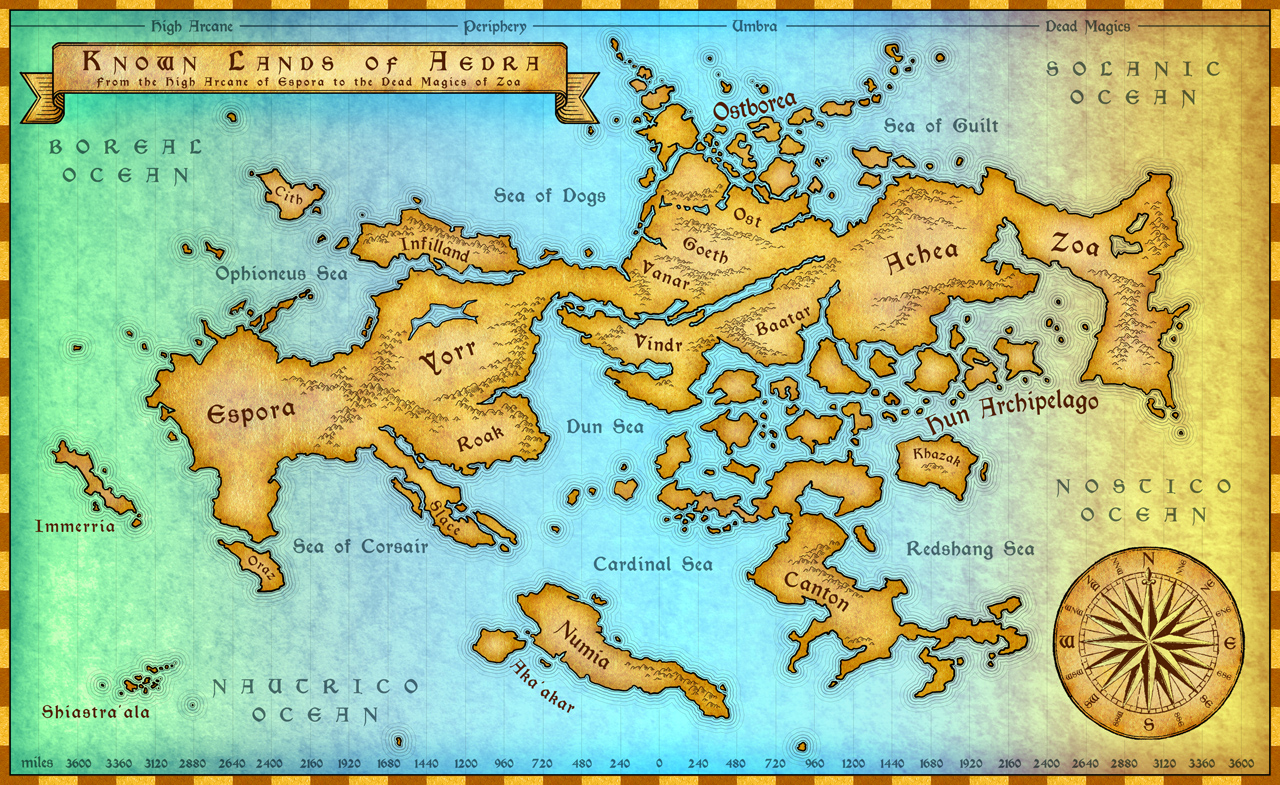
Their mountain, Magnus Montem, now lies on the planet Aedra in the center of the Barrier Range between Yorr and Espora – the only substantial quantity of earth and rock not of that world. It has become a pivotal aspect of dwarven culture and religion, considered extraterritorial, still part of the planet Dreugh, and the heritage of all dwarven people.

Bitter feuds are fought between the clans for control of the mountain. It is symbolic of the dwarven people’s refusal to acknowledge Aedra as their new home. There isno ‘King of the Mountain,’ as that title belongs to the leading member of the royal family, supposedly still on Dreugh. Instead they have a Great Ambassador, charged with representing Dwarven interests on Aedra and preserving the heritage of the Dwarven people.

Not all clans have preserved this ideology; some have declared Aedra their new home. The Great Ambassador has declared these dwarves traitors to their own kind. Dwarves that remain loyal to the mountain, or ‘of the mountain’ as they describe it, are called Mountain Dwarfs. Those dwarven clans deemed traitors to the Mountain are derogatorily known as Hill Dwarves, a reference to their stunted position in proper dwarven culture.

Druidic religion

The dwarven priesthood are druids. Druids from hill dwarf clans draw their power from Aedra as is normal for druids of other races, but druids from mountain dwarf clans draw their power straight from their great mountain, Magnus Montem. This is a poorly understood phenomena, and some suggest that perhaps this proves all planets have a life force similar to Aedra.

Clans and kinsmen

There are three distinct races of dwarves: iron, bronze, and gold. Each race has distinct physical characteristics and a propensity for certain kinds of professions. There are mountain and hill dwarfs of each race.

  • Iron dwarves have dark grey or black hair and grey eyes. They place emphasis on martial prowess and are known for producing some of the finest dwarven soldiers.
  • Bronze dwarves have red and brown hair and males tend to go bald by middle age. They are great miners, sculptors, and architects. The intricacy and sturdiness of their underground structures are famous.
  • Gold dwarves have blond and copper hair. They prefer to live topside, albeit at great heights, and are generally well tanned. They are renowned smiths and crafters. Weapons, armor, tools, and jewelry of gold dwarf make are always in high demand.

Dwarven Traits

Dwarves in mirrorworld possess all of the traits found in the Player’s Handbook, pages 19 and 20, except darkvision. In lieu of this, this they possess the the traits below.

Dwarven Nose: Dwarves have long noses with an exceptional sense of smell adapted to life underground. When underground or in an area of predominant earth and stone they can detect the presence of creatures nearby even if they are making no sound and are out of line of sight.

When the dwarf is near hidden creatures, the DM will secretly make a skill check of the dwarf’s perception against the hidden creature’s stealth. In the case of success, the DM will inform the dwarf he smells something nearby.

The DM may inform the dwarf of the type of creature(s) hidden if the dwarf is familiar with the creature. The stealth roll of the hidden creature(s) may be modified based on distance and other factors.

The dwarf will not be able to use this ability when other odors permeate the area, such as those of plants, animals, and people the dwarf is not familiar with.

Besides creatures, the dwarf has a chance to detect dangerous gases common underground that are odorless to humans, such as methane and carbon monoxide. A successful Perception test will inform the dwarf of the presence of such gasses.

Gold Biter: Dwarves can taste different kinds of metals and can determine the composition of a metal alloy on a successful Insight check.


Hill Dwarf

Hill dwarves are the most common dwarves to be encountered by other races. They are generally friendly people that try to be part of the greater world.

Many hill dwarves travel upon reaching adulthood, to experience and learn about the world they now consider home. Their journeys are recorded in historical chronicles back at their clan’s hold. No detail is considered trivial. To have one’s name written in one of these tomes is to be immortalized among the dwarven kind.

Hill dwarves have their own king and royal line, obviously unrecognized by the mountain dwarves, which unite all hill dwarf clans.

They consider mountain dwarves as backwards zealots, lost in the past and incapable of adapting to the current situations.

It is customary of hill dwarves to sprinkle a little earth on their food before meals, to symbolize their new union with Aedra.

Mountain Dwarf

While not openly hostile to other races, mountain dwarves are highly territorial, especially when it comes to their mountain, Magnus Montem. The are very formal and take great pains to address others by their proper title, and expect others to treat them the same.

Mountain dwarf clans see each other either as allies or enemies, but never friends. Members of different clans will be highly competitive in all things, be it eating, combat, or tests of endurance. These situations can become quite comical and sometimes deadly.

Each clan keeps relics made of homestone, rock of Magnus Montem, usually as statues of their honored ancestors. Individuals will carry a small pendant of homestone with them as a physical connection to Magnus Montehm. They will go to great lengths to retrieve it if stolen or lost.

Mountains dwarves believe their homeworld, Dreugh, survived the assault of the gods and that someday they will return to it. Most homes have globes of Dreugh and children memorize the geography of it at an early age. Claiming their homeworld is no more is considered a great insult to mountain dwarves.
Feytouched

There had always been humans that were drawn to the various secretive races of Fey. During the long exodus to Aedra these outliers were derogatorily known as ‘mushroom men’ for their propensity to be found sitting within mushroom circles, hoping for an encounter with a fairy. Often encounters did happen; the Fey were just as curious about humans.

These encounters continued well after Aedra was settled and men built small human villages encircling Fey domains: mushroom circles on a larger scale.

Over the centuries, this close proximity with Fey lead to a new breed of men that shared some of the traits of their neighbors. These people were referred to as Feytouched.

Most feytouched originate from inside or near Fey territories, but it is not unknown for a child with Fey heritage to be born to human parents, the blood of a Fey ancestor reasserting itself.

Outsiders

Feytouched, at least those discovered to be such, often find themselves given a wide berth by humans; many are raised on stories of unlucky mortals that found themselves on the receiving end of a curse cast by a whimsical fairy – and these stories are not entirely untrue. Many feytouched will go to great length to hide their heritage for this reason. Others will use this reputation to their advantage.

Feytouched Traits

The four Feytouched subraces replace the elven races and half-elf race found in the Player’s Handbook. They have almost identical traits, only deviating where noted.

Sithic Fir (si·thik feer)

The Sithic Fir are the inheritors of the magical powers of the Fairy race.

Fairies usually reside in pocket dimensions in the ethereal plane, tethered to the real world through strong wishstones. Within these fanciful realms of their own design, fairies appear as beautiful humans with gossamer wings and play and fly amongst impossible landscapes. This appearance in the real world within the mists that surround their wishstone. If a fairy leaves this mist they revert to their true form which is that of a small winged humanoid creature the size of a dragonfly.

Sithic Fir have fair skin, golden or black hair, and vibrantly blue eyes.

Sith Fir have Elven and High Elven subrace traits from the Player’s Handbook, found on page 23 and 24. Instead of Elven, they speak Wennish, the language of the Fey.

Instead of the darkvision trait, Sithic Fir possess the follow trait:

Truthful Vision: Sithic Fir have a knack for seeing illusions for what they are. They have advantage on Investigation checks to determine if a creature or object is disguised by illusion. In addition, when encountering a polymorphed creature a successful Investigation check will inform the player of the creature is not in its original shape.

Daoine Fiodh (day·nah feh)

The union of the Meliae, or Tree Folk, and humans are the Daoine Fiodh.

The Meliae are wild forest Fey, barely civilized, that wander large forests in small tribes. They dislike civilization and permanent abodes, and these traits are often inherited in Feytouched of their ancestry. It is said they don’t truly die but become trees.

Daoine Fiodh have dark skin, red or brown hair, and dark brown or green eyes. Some even grow antlers.

Daoine Fiodh have Elven and Wood Elven subrace traits from the Player’s Handbook, found on page 23 and 24. Instead of Elven, they speak Wennish, the language of the Fey.

Instead of the darkvision trait, Sithic Fir possess the follow trait:

Speak with Plants: A Daoine Fiodh can cast the spell Speak with Plants as a 3rd level spell. Using this ability requires no verbal or somatic components. This power can not be used again until after a long rest is completed.

Samhach (sah·vah)

Among the Fey none are as mysterious as the Breabadair, the weavers. They are reclusive creatures that live underground, associated with dark magics, spiders, and the power of augury. The product of the Breabadair and humans are the Samhach, the Silent.

Samhach have an almost albino appearance: pale white skin and white hair. However their eyes color is almost always jet black.

Samhach have Elven and Dark Elven subrace traits from the Player’s Handbook, found on page 23 and 24. Instead of Elven, they speak Wennish, the language of the Fey.

Instead of the darkvision trait, Samhach have a climb speed of 30, able to scale even sheer surfaces.

Tycheros (tee·kee·rohs)

The Tycheros, or the Fortunate, are the product of humans and nymphs. They come in all variety of appearance, but are always very comely.

Nymphs are colloquially called shifters. They have fluid fluid features, able to change their appearance of gender at will. They move through human lands masquerading as various individuals they encounter for profit and mischief. Occasionally this results in child. Tycheros always have a human mother and shifter as a father.

Tycheros have the Half-Elf traits from the Player’s Handbook, found on page 39. Instead of Elven, they speak Wennish, the language of the Fey.

Instead of the darkvision trait, Tycheros possess the follow trait:

Alter Self: A Tycheros can change their body in the fashion of Alter Self spell. Using this ability requires no verbal or somatic components. A player can assume the appearance of a specific individual if they are able to observe the target closely while using it.

The ability stills require concentration like the spell.

Kindred

After the fall of the Antimage empire in the 4th age, the surviving leaders retreated back into the jungles of Achea to regroup and plan their revenge. Experiments began immediately on a new type of soldier: humans augmented with the traits of animals.

These experiments were discontinued after several decades in favor of augmenting animals with human traits, but not before several successful strains escaped back into human society, resulting in the race now known as Kindred.

Kindred appear as mostly human with animal like traits, depending upon their particular breed. These physical traits vary per individual, with one maybe possessing animal like eyes, while another sporting large backwards curving horns.

As they age, it is possible for kindred to develop new animal traits. Some very ancient kindred are so animal-like they have been mistaken for normal animals.

Kindred can intermix with normal humans and bear offspring that are completely human in appearance. However, their modified genes are passed down throughout the generations, and it is possible for a child with full Kindred traits to be born to completely normal appearing humans.

Such Kindred often find themselves shunned and quickly leave to seek answers about their heritage.

Essence

Kindred refer to their animal side as their essence. Capra kindred will say they have the essence of the ibex within them, for example, while an Avi will say they have the essence of a falcon.

Unity in diversity

While there are many distinct races of Kindred, their communities are inclusive to all of their kind. Their unique history and current challenges unite them in common cause. This tolerance extends to other lifeforms; Kindred do not judge others on physical appearance, and their villages are often refuges for other strange creatures.

The Path

Kindred choose to either reject or embrace their animal heritage. There is no dishonor in either.

Those that choose the human path will join like minded communities or attempt to reintegrate themselves into human society. This can be a difficult path as many humans treat Kindred with suspicion.

Kindred that choose the path of the animal will live in the wilderness among animals similar to their essence. Feral kindred keep their distance from humans, either out of disgust or to avoid remembering what they have forsaken.

Kindred Traits

Ability Score Increase: Strength and Constitution scores increase by 1 point each.

Age: Kindred mature a little faster than humans, reaching adulthood around age 14. They age noticeably faster and rarely live longer than 75 years.

Languages: Kindred can speak common and can communicate with and mimic sounds of animals similar to their essence. This communication isn’t supernatural; the kindred only understand and convey ideas and feelings the animal understands.

Breeds

There are five common breeds of kindred. Rumors and myths are told of encounters with other varieties but they have never been confirmed.

Capra

Capra are humans with mountain ibex genes. They excel at climbing and survival. They have the digestive enzymes to consume foliage such as bark, grass, and leaves.

They generally have a backward curving horns protruding from their head, wide jaw bones and sturdy teeth. A few have eyes with horizontal eye slits, like goats.

Ability Score Increase: Strength is increased another 1 point.

Size: Capra can vary in height as any human, ranging in size from barely 5 feet to well over 6 feet tall. They are always considered Medium in size, regardless the range.

Speed: Capra have a based movement rate of 30 feet.

Natural Climber: Capra gain proficiency in Athletic.

Omnivore: A capra has two stomachs and is capable of eating plant matter heavy in cellulose, such as bark, leaves, and other foliage. They do not make a Survival check to feed themselves in regions with available plant material. They will need to forage as normal if trying to locate water or other types of food sources.

Head-butt: If a capra moves at least 20 feet straight towards an opponent before attacking it, he or she can attempt to shove the creature as a bonus action.

Avi

The avi kindred are humans mixed with falcon genes. Their arms are feathered and can be used as wings to allow them to slow a fall or glide. Often, all hair on their body is replaced with feathers. Their bones are hollow, like birds, reducing their body weight significantly.

Ability Score Increase: Wisdom is increased 1 point.

Size: The avi are generally shorter than other humans, averaging a little more than 5 feet in height. They are incredible light, averaging 50 lbs. Their size is medium.

Speed: An avi has a ground based movement rate of 30 feet.

Keen Senses: They have proficiency in Perception.

Glide: Avi wings give them a glide speed of 50 as long as they aren’t wearing Medium or Heavy armor. While gliding they fall only 10 feet per round. They can dive, reducing their movement speed and increase their descent speed at an equal rate, i.e. an avi can reduce their movement rate by 20 feet to fall an additional 20 feet.

An avi can only glide while its total weight is less than its maximum encumbrance. Their own body weight is is not included in this calculation.

An avi that can glide does not take falling damage.

Zorri

The zorri are a cross between humans and polar foxes. They are comfortable in frigid cold climates and excellent hunters. They are a very clever people, known for having large collections of books and treatise on various academia.

Zorri hair changes color during the year, from white in the winter to a grey or dark brown in summer. They can sport small canine ears, teeth, and many have furry tails.

Ability Score Increase: Intelligence is increased 1 point.

Size: Zorri can vary in height as any human, ranging in size from barely 5 feet to well over 6 feet tall. They are always considered Medium in size, regardless the range.

Speed: Zorri have a based movement rate of 30 feet.

Winter Coat: The zorri are do not suffer exposure damage when in frigid climates and are resistant to cold-type damage, only suffering half the damage normally inflicted.

Keen Nose: Zorri gain proficiency in Survival. If tracking an object or creature that has a very familiar scent, for example someone they know or they possess a piece of the creature’s clothing, they get double the proficiency bonus.

Direction Sense: A zorri above ground can see the magnetic poles. The DM should take this into consideration when determining if a party is lost.

Felis

Felis kindred are humans imbued with several genes found in the caracal feline species. They are inquisitive people known for a playful but distant demeanor. They are generally nocturnal and prefer warmer climates over cool ones.

A felis can have many feline body characteristics. They all have pointed ears high on their head that end in long tufts of black fur. Many have whiskers and slitted eyes that can glow when reflecting light in the dark.

Ability Score Increase: Dexterity increases 1 point.

Size: Felis can vary in height as any human, ranging in size from barely 5 feet to well over 6 feet tall. They are always considered Medium in size, regardless the range.

Speed: A felis has a movement speed of 35 feet.

Never Thirsty: Felis are highly efficient with water. They can obtain all their water needs from what they eat unless it is dried rations. They gain advantage on Constitution saves when suffering dehydration.

Hing Legs: The Felis have powerful hind legs that assist them in jumping.They can ignore the penalties of not running 10 feet before performing a long jump or high jump, add an extra 10 feet to long jump distances and 5 feet to high jump distances, and have advantage on ability checks to jump obstacles or land on difficult terrain.

Nightvision. Felis have superior vision in dim conditions. They can see in dim light within 60 feet of themselves as if it were bright light. They are blind in dark conditions like any other animal.

Softfall: They are resistant to fall damage, taking only half the normal amount.

Claws: Felis have natural retractable claws in their fingers. These claws do 1d4 slashing damage, and considered light and finesse weapons.

Traszee

Antimages performed experiments in amphibious super soldiers, augmenting humans with newt genes. The traszee were the result. They were one of the last experiments in human augmentation before the project was cancelled.

Trazee are human in appearance except their hands and feet are webbed and their skin is covered in patterns of bright colors. While infants, they have gills alongside their neck, but these slowly fade away and disappear as they become adults.

They dislike to be away from water sources for extended periods of time as their skin can quickly dry out.

Ability Score Increase: Constitution increases another 1 point.

Speed: Traszee have a base movement rate of 30 feet. They are also adept swimmers and  have a swimming move rate of 30 feet as well.

Regeneration: The traszee are known for the powerful regenerative abilities. Lost fingers or toes will regenerate in a week, while larger limbs or other organs can take a month to return. When spending hit dice to heal during a short rest, add an extra point healed per die spent.

Poisonous Skin: The trazee can choose to excrete a poisonous residue from their skin that is toxic to other species. A trasee can inflict 1d4 poison damage per round on another creature if contact is constant. This is often used during grappling, but can arise in other situations. Traszee, newts, and certain snakes are immune to this poison.

Amphibious: Traszee can breathe air and water. Infants have their gills, while adults can pull oxygen out of the water straight through their skin.

Saltwater Intolerance: Saltwater is dangerous to traszee, causing them great discomfort. For every 5 minutes more than half their body is immersed in salt water, they must make a Constitution save vs DC 15 or suffer a level of exhaustion.

Halflings

Halflings are an integral part of many human cultures, ingrained into the economic systems that move commodities and provide services. They are merchants at heart, haggling prices, establishing trade routes, and making an extra buck off of rubes that should have known better.

They originally come from the world Shea and at the time called themselves the Hin. Not much is known about this world, but many believe it was covered with green rolling hills, quiet brooks, and large pastures. Chances are this is a very idealized view of their homeworld, and the know it, but they see no harm in such beliefs.

During the Exodus to Aedra, it was the Hin that took the initiative to start trade between the various races, breaking down the walls of distrust and xenophobia. Thier native language become so prominent,it become the common language of most races. In essence, men speak Halfling.

Halfling Traits

Mirrorworld Halflings use the standard core racial traits from Player’s Handbook except for the following:

Languages: Besides Common, Halflings speak the Trader’s Tongue. This secret language allows its speakers to hide complex trade negotiations amongst simple innocuous small talk, similar to how Thieves’ Cant functions. Unlike the Thieves’ Cant, there are no formal code words; the speakers quickly agree on a lexicon of terms as negotiations open and carry on from there.

To outside listeners, two halflings could appear to be doing nothing more but passing the time talking about their garden or children, but in reality be in the midst of a highly valuable transaction involving rare commodities.

Subraces

Lightfoots: Lightfoot clans are wandering merchants that operate large caravans that travel the various trade routes of Aedra. They have a reputation for being involved in less than reputable goods and rarely stay in one location long.

Lightfoots do not like to enter into long term obligations and prefer to rely on verbal contracts.

Stouts: The Stout clans, unlike their Lightfoot brethren, like to stay put and deal in exports. Halfling villages will dot the perimeter of larger human kingdoms, producing high quality goods for trade. They are well known for the salted meats, cheeses, pipeweed, ales, baked goods, and clothing.

Stout halflings are renown for their exact trade contracts. A deal is not done until it’s on paper, signed and notarized.

Humans

Humans are the most prominent of race of men on Aedra.

Thousands of years ago, their ancestors lived on the world Istoval, where they used powerful sciences to wage war on each other. Like all the other races of Aedra, the elves rescued a significant number of them, including many samples of the rich diversity of flora and fauna their planet enjoyed.

Most of the life that now covers Aedra is of Istoval origin, which perhaps explains humanity’s prosperity.

Ethnicities

There are human cultures in almost every land of Aedra, including an aquatic faring race in one of the northern seas. Cultures and language can vary wildly from each other.

Cultures of the High Arcane

Cith

The Cith hail from an island nation of the same name. It is a culture in decline due to a magical curse the causes all their descendents to be male. This curse has affected the last two generations so far their population has dropped more than half. The average age of a Cith is 47.

Cith are often found outside of  their home, attempting to secure a wife from other regions, but most women are loathe to return with them; stories of the atrocities of desperate Cith men abound.

Cith speak Esporic, Common, and Cithi.

Esporan

Espora is the largest region of land in the High Arcane. Massive cities dot the coast lines, while the interior is generally left undeveloped. Esporans enjoy a wide variety of conveniences unavailable to other regions: automated manual labor forces, public transportation devices, instant communication, an extensive illusionary entertainment industry, public information repositories, advanced health services, as well as some of the most powerful military devices known to man.

Esporans rarely leave home as they find most other regions untolerable.

Esporan speak Esporic and Common.

Immerian

Immerians have no distinct appearance as many of their citizens are immigrants from other regions. Immeria is a realm of high wizardry and home to the largest wishstones in the world. Powerful magical beings reside here.

The only government is a magocracy of High Wizards that convene annually to discuss matters of magic. Laws are few, replaced by informal alliances between neighbors.

Immerians speak Esporic and Common.

Orazzi

Orazzi are a water faring nation of traders and merchant marines that compete with the less principled Slaccian nations to the east. They have access to great magics, but prefer to use them only as needed, relying on their own strength, wit and guile. Oraz is known for its massive coastal fortresses.

Personal honor is of the utmost importance to Orazzi; the believe their ethical code separates them from other cultures.

Orazi speak Esporic and Common.

Cultures of the Periphery

Akarri

While Numia was able to recover from their enslavement to the antimages, their neighbors in Aka’Akar did not. The whole area has reverted to an age of extreme barbarism.

Akarri speak Numian and Common, albeit a broken version of them.

Heretics

Infilland is a mountainous and barren region where outcasts, heretics, and pagans go to practice their nefarious beliefs. Those that journey from here tend to hide their origin and have trouble fitting in with other societies.

Heretics speak Common, and have a broken understanding of Esporic, Yorric, Vanian, and Achean.

Numian

They last refuge of the anti-mages before they were driven back into Achea was in the lush jungles of Numia. The people there have a great distaste for science and technology, and despise all things of anti-mage origin.

The place great faith in their ancestors and are one of the few cultures that incorporate undead fully into their society.

Numians speak Numian and Common.

Orrian

The Orrians of Yorr are a nomadic people that are in constant conflict with competing tribes. The strength of magic in this region is constantly in flux, and the sorcerer kings continually vie for the best territories.

Orrians place emphasis on obtaining magical power over all else.

Orrian speak Yorric and Common.

Roshi

Roak is one of the few areas of Aedra that humans are not the dominant race. It is an arboreal region home to many fey creatures. Roshi are known for the tolerance of magical creatures and somewhat alien way of thinking.

Roshi speak Common, Fey, and either broken Yorric or Slacian.

Slaccian

Slace is a culture of small maritime powers that are responsible for much of the piracy of the region. Slaccians see the world as a place to exploit and that it is only natural that the strong exploit the weak. Their naval expertise is only challenged by their rivals, the Orazzi to the west.

Slaccian speak Slacian and Common.

Cultures of the Umbra

Baatari

Baator is one of the oldest civilizations of Aedra and also one of the strangest. Social rank within their culture is based not on heredity or wealth, but personal honor. One rises or falls in society through careful management of their public appearance.

Baatari wear masks to symbolize their rank and station in life. They consider their mask their ‘true face’ and will never willingly take their mask off in public. The higher their rank, the more magnificent mask a Baatari wears.

Mask makers in Baatari society hold a place of special significance in Baatari society.

Baatari speak Common and Baatari.

Cantonese

Canton is similar to earth-like asiatic cultures. In Cantonese society, emphasis is placed on one’s family and clan. Through a complex bureaucratic process, the various clans via for station and power.

Up until recently, Cantonese money was the reserve currency for many of the neighboring nations, forming the basis of international trade. For over a year now, Cantonese imperial warship have blocked all trade to and from the region; no reason given.

Rampant inflation has virtually destroyed the currency’s value and many areas are openly hostile to Cantonese travellers.

Cantonese speak Cantonese and Common.

Goth

The land of Goeth is filled with barbarian tribes that attributes their strength to animal spirits. Each tribe has its own totem animal and their cultures and survival strategies revolve around mimicking this animal.

Players choosing a Goth human should pick what animal spirit their tribe worshipped.

Goths speak Common, Gothic, and can mimic and interpret the sounds of their totem animal.

Hun

The Hun Archipelago stretches for two thousand miles. Noone has ever successfully counted how many islands it ecompasses, but it is easily in the thousands.

The Huns have a subsistence lifestyle, generally, living in small tribes on one or more islands, only fishing for what they need. Metal is scarce and they go to great lengths to acquire it, either through trade or piracy.

They place great emphasis on their ships and land holdings, as it is the only things of real value they possess.

Huns have a Great King that resides on the largest island in the archipelago, Khazak, that has  a mostly superficial role in their culture. However, when the Great King dies, his or her successor, in order to cement their position, will order a great raid to be made on the coastlines of neighboring nations. Thousands of ships will scourge the coastal cities, looting and taking slaves.

For this reason, it has become a common greeting in the region to ask of the health of the Great King.

Huns speak Common, Hunnic, and broken Cantonese.

Ostii

Ostii live in the icy northland of Ost and Ostborea. There are talented fisherman and cold weather survivalist. A fat Ostii is a successful Ostii in their own eyes. They are a reserved people and tend to avoid political conflicts.

Ostii speak Common and Ostic.

Seadogs

In the Sea of Dogs are large floating cities of reed and wood that are homes to the infamous Sea Dogs. These people live their entire lives on the water, and many are born and die never setting foot on dry land.

It is believed the Seadogs were original people from Vanar that fled the encroachments of antimage forces during the 4th age as their language is obviously derivative of that region.

A seadog on land is almost unheard of and almost always a result of criminal punishment.

Seadogs speak Common and a strange dialect of Vanarian.

Vanari

Vanari are strong proponents of a caste lifestyle, with each person born to fulfill a particular role in life. Generally this station is the same as one’s own parents.

The land of Vanar is divided into small fiefdoms. Residents rarely travel beyond the boundaries of their own particular region. Most Vanari are quite content with this system and simply focus on doing their own particular tasks as best they can.

The exception to this is the warrior caste of Vanari that seek to prove themselves in battle. This often takes place in small border skirmishes with the land of Vindr or Goethe.

Vanari adventurers are a rare lot, either having forsaken their own homes or perhaps the last survivors of a destroyed fiefdom.

Vanari speak Common and Vanarian.

Vindrin

Vindr is a culture most reminiscent of early Renaissance Europe, home to various competing countries and city-states. As the center of world, they are a melting pot of ideas, cultures, and change.

These region used to be part of Vanar, but slowly moved away from their caste ideal as exposure to other cultures changed societal views.

Player characters from this region can choose to be more specific of their homeland. Possible countries are: Skaldinavia, Seaxia, Azzi, Borland, Gottland, Finnick, Crador, or Ostmark. City-states include: Salaria, Briquetage, Azuria, Leperhaven, Port Forb, Liberstadt, and the town of Trencher.

There is also an area called the Favon Wilds, home to a several barbarian tribes.

Vindrin speak Common and Vanarian.

Cultures of The Dead Magics

Achean

While technically part of the Umbra zone of magic, most cultures consider Achea a realm of the Dead Magics, as it home to the Antimages.

This isn’t to say all humans in this area are antimages, but their power dominates the culture, language, and traditions of the region.

Acheans tend to disfavor magic, relying more on science, mathematics, and technology to overcome challenges. There is also a strong xenophobic streak in their culture, making them intolerant of races other than men.

Those of Acheans lineage are viewed with suspicions by other cultures and tend to keep their origin secret.

Acheans speak Common and Achean.

Human Traits

Humans in Mirrorworld use all the same traits as found in the core 5th edition Player’s Handbook, including the variant human trait during creation.

The only exception to this is that humans do not choose their languages, but know those specific to their culture of origin.

Orc

Of all unreal, the Orc has become the most feared and hated. They are a mockery of mankind and a dark reminder of humanity’s war-ridden history. They are the bestial side of man, unbound by reason or empathy; nightmares of the id made real.

They do not know pain, they do not feel fear, they never show mercy. Their only ambition is to kill and devour men. They will continue to take life until the very life is hacked from them.

Orcs appear as bestial mockeries of men with blood red colored skin. They have large muscular bodies and pronounced jaws with sharp teeth. Their noses are often wide and eyes yellow with animal-like pupils. Most orcs are male, but females are spotted regularly; not that it matters as unreal beings are incapable of sexually reproduction.

The average newborn orc generally weighs 220 lbs and is 6 feet in height. Older orcs weighing close to 500 pounds and 8 feet in height have been encountered.

Orcs are incapable of making their own equipment and will use whatever they can scavenge as weapons, resorting to simple wooden clubs if necessary.

Orcs never stop growing as they age, their size dependent upon how much they have managed to eat. Larger orcs have had the longest time to scavenge and steal weapons and armor, and are generally the best equipped.

Orcs have no language of their own, nor do they understand communication. They do sometimes mimic what they hear, repeating the last words or phrases of previous victims.

Ecology

Orcs are spawned in earth baptized by the blood of combat. The size of the battle is not indicative of the likelihood of orc spawning; it is the ferocity of the fight which is key. The more anger, hatred, and bloodlust permeating a conflict, the greater the chance orcs will rise from the field.

Orcs form about a foot underground in an elastic mucus membrane that surrounds their body. Their growth is rapid and they will be fully developed within 12 to 24 hours. They then break from the earth as fully formed adults. From there they will immediately look to arm themselves and seek out their first victim.

As unreal, they are not true biological creatures and can safely ignore many limitations real creatures possess. While they do have internal organs, they are mere mimicry of human ones and not functional. They are unaffected by most poisons or diseases, do not get physically exhausted, and never sleep. While their heart does beat and blood pumps through their veins, both serves no vital function. They do need to breathe to stay active, but lack of air will not kill them; they will enter suspended animation until exposed to air again.

Orcs have an instinctive craving of humans flesh. It is the only food they will eat. Devouring humans enables them to grow in size and strength. Likewise, if they go too long without eating, they will diminish. An orc that does not eat for a month will die.

Orcs have no concept of family or empathy. They see no distinction between the elderly or children, men or woman. All are food.

They only camaraderie they may feel is towards other orcs. They will group up with other orcs from the same battlefields and display the military and combat tactics of those that fought and died there.

When orcs die they will melt into dust and slime and return to the earth.

Half-orc

Sometimes, for reasons unknown, an orc can become quasi-real. It is an extremely rare event. Some think its exposure to certain magics. Others believe it is when the connection between the orc and Aedra is severed.

A half-orc physically looks the same as any other orc, but possesses a sense of identity and self-determination. Where before they were driven by only by instinct, they can now think and feel as any other human.

Half-orcs have the capacity to learn, and, if given the chance, will quickly pick up the language of the region.

Biologically, the half-orc will undergo a painful process that transforms them into a normal creature, requiring food, water, and air. They become susceptible to disease and poison as well, and require 8 hours of sleep day. Sexual reproduction is still impossible.

Troll

Trolls are a type of unreal creature linked to geographical formations such as hills, mountains, and large rocks

Their appearance can vary greatly, but overall they resemble caricatures of humans, their facial proportion exaggerated, sometimes almost comically. They are generally hunched, thickly built, covered in fur or hair, and often sporting tails.

Skin and hair color are earth tones, and older trolls will often have a rock like appearance including patches of moss and lichen.

A troll grows in size as it ages, with mountain trolls as large as giants in their natural form. Those that have the ability to shape change will often reveal themselves in a smaller form to deceive enemies and give them a false sense of security.

Trolls will speak the language common to a region; the older they are they better their fluency. Very old trolls may speak several languages, including ones long since dead.

Ecology

Aedra does not have tectonic plates and would therefore not form mountains through tectonic forces. Instead, hills and mountains are the byproduct of one the more common type of unreal creatures that spawn on the planet, trolls.

It is believed trolls are manifestation of Aedra’s dreams of the dwarven race. While dwarves find such theories insulting, they two bear striking resemblances and habitats.

When a troll is born, a small mound of earth will rise from the ground which shall be forever more the troll’s home. As the troll ages, this mound will grow in size, starting as a small knoll and eventually growing into a tall mountain. Between 50-80 years the mound will have become a hill and after another 750-1500 years the hill will become a mountain.

It is unknown how high a troll’s mountain can grow. Trolls first appeared in the Third Age, four to five thousand years ago, and those that have survived predation still exist today.

As trolls age they gain magical powers. These abilities seem to be linked to the type of stone and earth their hill or mountain is made of. Known examples of powers are invisibility, weather control, shape changing, illusions, stone shaping, and stone meld.

A troll in contact with his hill or mountain is almost impossible to destroy. While they can suffer from physical assault, the very earth will be drawn up through the troll’s body to regenerate it of any damage. This ability is lost the instant the troll loses contact. Troll hunters that know of this weakness will go to great lengths to trick a troll from their mountain in order to destroy it.

When a troll is destroyed, its hill or mountains will cease to grow. Its appearance will become boulder strewn and eroded. Trees wither away to be replaced with weeds and small shrubs. If the troll is destroyed quickly after it first forms, its mound will flatten out leaving only a small impression in the earth.

Relations with trolls vary. Most trolls tend to avoid humans, but some have grown quite fond of them. Those that are hostile will generally be hunted and slain, if possible, and if not, will given a wide berth.

It is rumored that troll mountains contain a large core of valuable metals or gemstones, the so-called ‘heart of the mountain.’ Miners seeking such a load will invariably have to deal with the troll first. If such a treasure does exist, no one that has found it has made it public knowledge.

Hun Corsair

The corsairs of the Hun Archipelago are renown and feared pirates that have been raiding the surrounding region for over 150 years. They are a constant menace to merchant vessels in the Dun, Cardinal, and Redshang seas.

The majority of Hun corsairs are tribal-run operations, with captains often being the head matriarch or patriarch. These families spend the majority of year as fishermen and local traders, and resort to piracy only during the winter seasons or when their primary trade has gone poorly.

A small minority of Hun pirates are not Hun themselves. In all cultures there are individuals unwilling to abide by the rules anf piracy can have an appeal to such misfits. Some are on the run from the law, others seek to escape the bounds of their restrictive societies. Huns corsairs have many democratic traditions, and regardless race, nationality, or gender, anyone showing the necessary temperament and skill will be treated fairly.

Some of the most famous captains of the Hun were outsiders that had earned the respect and loyalty of their Hun crew: the Barbar sisters, Captain Black, and Captain Ro Endan to name a few.

During times of depression, or political upheaval (such as when a new king is chosen) clan leaders will summon the tribes to form massive armadas of ships to wage war on nearby nations. These fleets will number in the hundreds and sometimes even thousands.

In such numbers, the Hun corsairs will scourge the coastlines plundering towns and villages, and enslaving all those not killed in battle. Slaves not held for ransom will be auctioned in Baatar or sold to Achean antimages.

Huns armament and ships vary greatly.

Small tribes will have nothing more than small fishing vessels and large rowing boats. Boarders little more than fisherman armed with whatever weapons they have on hand. They rely on surprise and numbers to overcome defenders.

Larger tribes may have galleys or xebecs with well equipped crews capable of harassing the larger merchant fleets.

Regardless the chance of victory, Hun corsairs will hesitate to commit their forces against well defended opponents. Their shipmates are often close friends or family, and it is only when they are truly desperate that they will engage in battles likely to have heavy casualties.


Antimage

Antimages are humans that have devoted their lives to the progress of science, the destruction of magic, and the eradication of all non-human races. They are divided into three ranks: apprentices, adepts, and masters.

Apprentices are taken from the general population, either from the slaves they buy or occasionally individuals their spies recruit from other lands. Antimages seek out psychopathic individuals with strong inclinations towards science and then indoctrinate them with their xenophobic ideology. They are generally used for low level missions and kept in check with promises of greater rewards. They will usually be entrusted with a minor technological device to assist them in their goals.

From the ranks of apprentices, Master choose the more promising and further their training until they are considered Adepts. Antimage adepts are the field commanders for their forces generally the highest ranking members that can be found outside Achean territory. They can be dangerous individuals to face. Adepts sports technological upgrades to their body, enabling them to perform superhuman acts, and will be equipped with various high tech weaponry. They almost always have a personal guard, human or otherwise.

At the top are the Antimage masters. They are the immortal leaders of their movement, each an original colonist from the dead world of Istoval. They are empowered by the most powerful of scientific advances which have not only kept them alive for thousands of years, but given them immense destructive capabilities. Each master is unique and enhanced in a different method.

Antimage masters reside deep in protected fortresses in the jungles of Achea, where they spend their time plotting the downfall of the magic kingdoms of the West while simultaneously frustrating similar plans of their peers. Each is protected by lesser antimages and their armies of beastmen mutants.

History

During the Fourth Age, the Antimages of the East had dominated Aedra until being beaten back by Ascendant forces. But who were they, where did they come from, and why did they possess such powerful and destructive technology?

When the elves came to Istoval and rescued humanity from the gods, its inhabitants were embroiled in an endless worldwide war, enslaved by a group of fascist leaders. Once upon the Ark and freed from bondage, most of humanity quickly discarded these brutal ideologies, but a small group of human did not.

They called themselves Traditionalists. They were engineers, chemist, physicist, and biologist and had all held high political positions back home. Life in the Ark, among the peaceful Archons and other strange races was intolerable. So intolerable, they chose to sleep the entirety of the Ark’s voyage to Aedra in cryogenic chambers. They conjectured the Archons would sooner or later find a new world for humanity to settle, and at that time, they would emerge and rebuild the new world in the image of the old. However, things did not go as planned.

To their dismay,  the Archons did not find separate world for each race, but instead chose Aedrea to become the new home for all of mankind.  The Traditionalists knew they could not compete with all the different races with their strange  magics, so they hid their intentions and waited for a chance to strike.

The Fourth Age, with its upheaval and diminishing of magic, was that chance. The Traditionalist established their own small empires and began a brutal campaign of racial cleansing. The other races of mankind: dwarves, halfling, gnomes, and many others, went into hiding or fled to the West. However, the primary targets of their initial campaigns were wizards. For this unrelenting pursuit of all those that could wield magic, Traditionalists were dubbed Antimages.

Quickly the Antimage old animosities returned. Ideologies of ethnic superiority rekindled and various factions organized with the Antimage leadership. Humanity divided into four ethnocentric nations: dark skinned humans on the island nation of Numia, asiatic humans in Canton, caucasians in the regions of Vindr, and arabic/indic humans in the region now known as Baatar.  Aedra was plunged into a world war.  The new world had begun to mimic the old.

But this war was short lived as psionically endowed humans from the west, calling themselves the Ascendants, ended the Antimage rule and pushed them into the Dead Magics of the Achea to the West, where they remain still today.

For hundreds of years they have kept quiet in their dark jungles and the rest of the world has been content to leave it at that. There are rumors of strange creatures being spotted along the Achean borders, and it is a known fact Baatari and Hun slavers often transports their goods into Achean territory. Beyond that nothing else is known and most would prefer to keep it that way.